






TILT BEAM
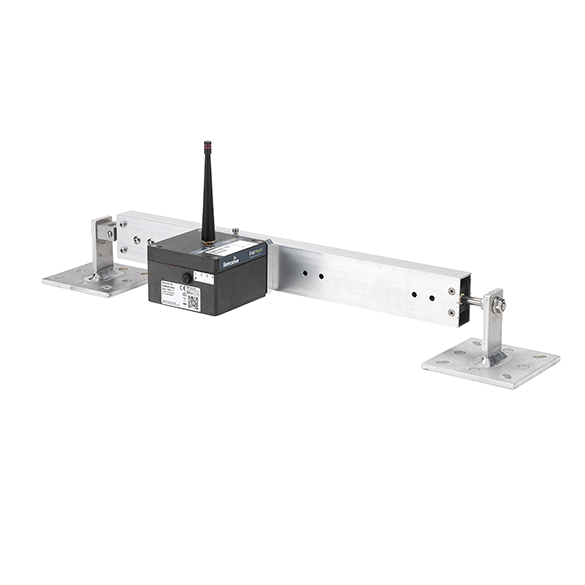
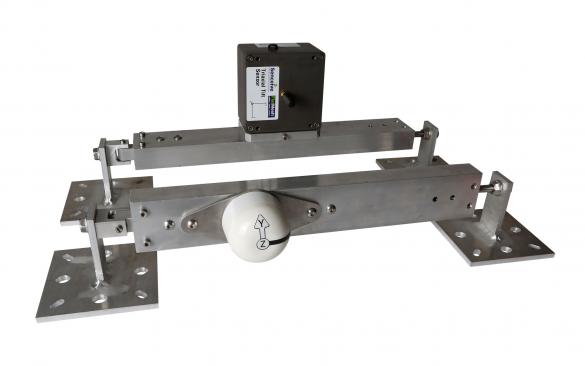
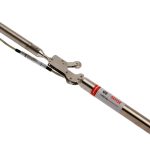
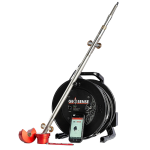
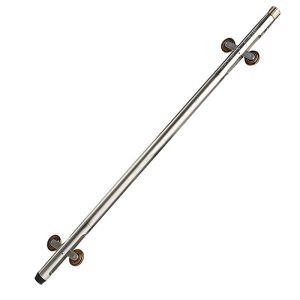
The Tilt Beam is a lightweight, rigid aluminium beam that is used in conjunction with a Triaxial Tilt Node, a NanoPlus or a NanoMacro.
The tilt beam has been successfully used in many applications, including:
- Movement monitoring of any structure
- Longitudinal settlement
- Tunnel convergence/divergence
- Lateral displacements
The tilt beam can be mounted in any orientation and rapidly deployed in single and daisy chained configurations.
Installation of the tilt beam can be performed with minimal tools in minutes. Complex bolting and washer arrangements are not required due to the beam’s inbuilt bearing and joint system. This allows for thermal expansion and misalignment of the support brackets while still accurately monitoring the structure. The attached tilt node does not require any levelling, further reducing installation time.
Features
- Lightweight and durable aluminium and stainless-steel construction
- Fully wireless; no wiring or electrical connections required
- Simple installation and removal. Brackets installed in minutes; beam installed in seconds
- Can be installed in any orientation without requiring levelling
- Low friction, weather resistant bearings that do not require maintenance or lubrication
- Automatically compensates for thermal expansion and misalignment of support brackets
- Can be daisy chained to provide movement profiles
| Brands | Senceive |
|---|---|
| Beam Dimensions | 500 mm, 1000 mm, 2000 mm, 3000 mm (custom lengths available on request) |
| Support Bracket Dimensions | Base: 100×100 mm Height: 75 mm |
| Total Mass (without node) | 2 kg (approx. for 2 m beam) |
| Material | Aluminium with A2 stainless steel fasteners |
Related products
IPX IN-PLACE EXTENSOMETER
In stock
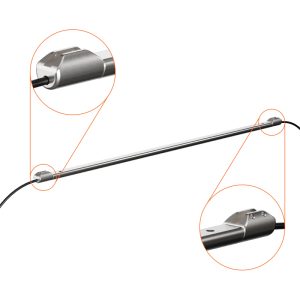
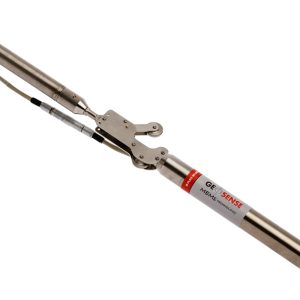
The In-Place Extensometer (IPX) offers automated monitoring of standard magnetic extensometer installations. The system is designed for a simple, adaptable installation with a single cable connection at the top of the borehole. Its large measurement range accommodates large levels of settlement or heave, and ease of adjustment means it can be reconfigured for changed site conditions such as embankment filling or cutting.
DRIVE-IN PIEZOMETERS WP-3400 & SGP-3500 SERIES
In stock
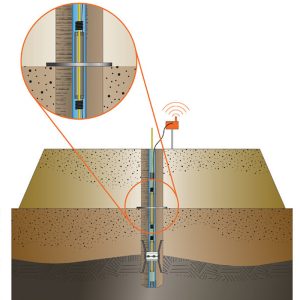
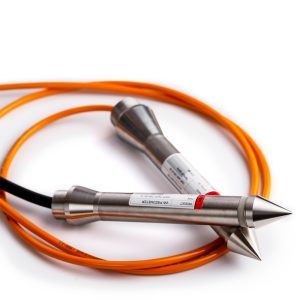
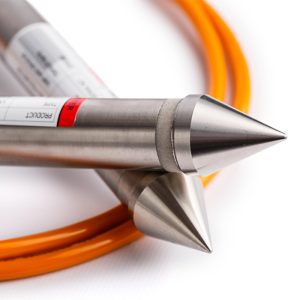
Drive-in piezometers, also referred to as push-in piezometers, are designed for installing in soft clays, organic or fine grained cohesionless soils typically with a SPT-N value less than 10. They are available with a CPT fitting or 1” BSP thread.
Depending on the depth and type of soil, they can either be pushed directly into the soil from ground level to the required depth or pushed into the base of a CPT test or drilled borehole.
TRIAXIAL TILT SENSOR NODE
In stock
IN-PLACE INCLINOMETER (IPI)
In stock
STANDPIPE PIEZOMETER
In stock

INCLINOMETER CASING QJ
In stock
INCLINOMETER SPIRAL SENSOR
In stock
REED SWITCH PROBE
In stock
Reviews
There are no reviews yet.