

VW STRAIN GAUGE SPOT WELD VWS-2020
The VWS-2020 series vibrating wire strain gauges are designed primarily to measure strains on the surface of steel structures but may also be used on other types of material.
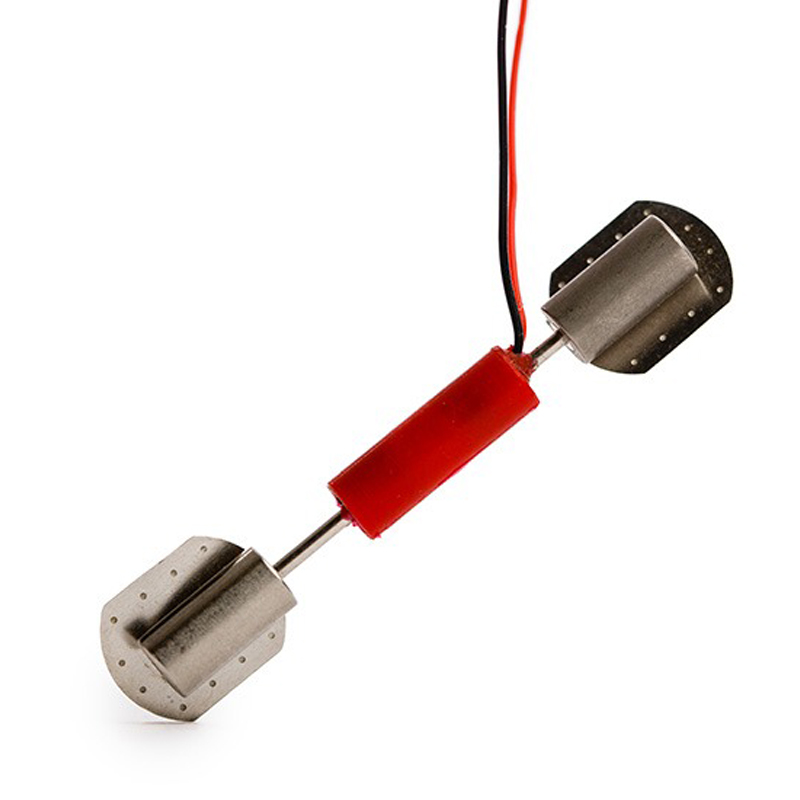
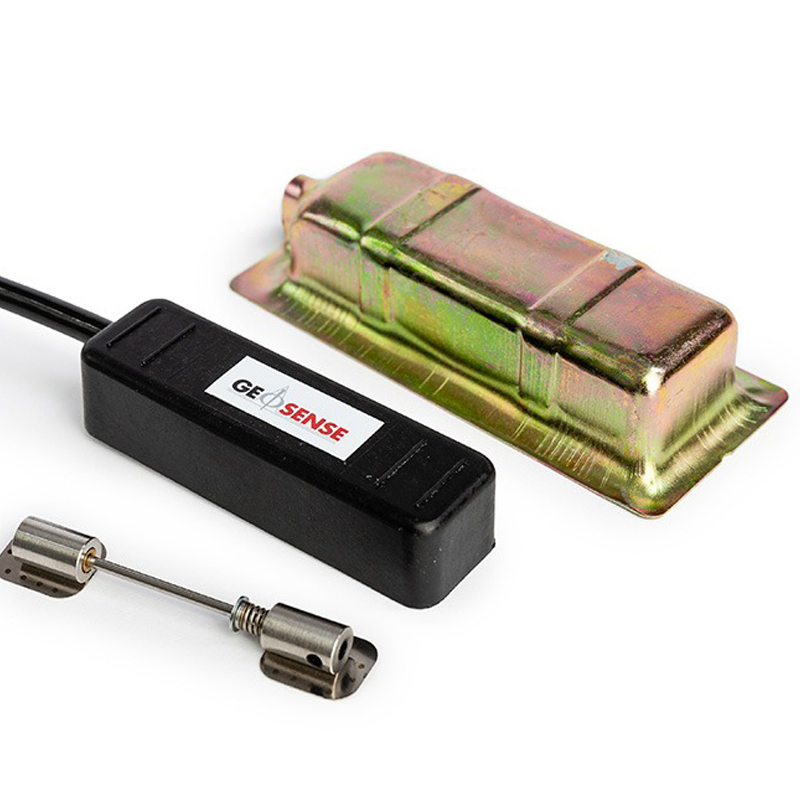
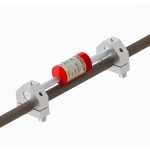
The gauge consists of two end blocks with a tensioned steel wire between them. The end blocks are attached to stainless steel tabs which may be attached to steel structures by spot welding or, using alternative end blocks, bonded or grouted.
Precision tensioning is carried out on site using a special tensioning jig and the gauge can be set for compression, tension or at mid-point.
The strain gauge operates on the principle that a tensioned wire, when plucked, vibrates at its resonant frequency. The square of this frequency is proportional to the strain in the wire.
Around the wire is a magnetic coil which when pulsed by a vibrating wire readout or data logger interface plucks the wire and measures the resultant resonant frequency of vibration.
As the steel or other surface undergoes strain the end blocks will move relative to each other. The tension in the wire between the blocks will change accordingly thus altering the resonant frequency of the wire.
VWS-2020 strain gauges are available in two versions:
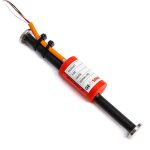
- Gauge with integral coil housing
- Gauge only with separate coil housing
| Brands | Geosense |
|---|---|
| Strain Range | 3000 με |
| Resolution | 0.4 με |
| Accuracy | ±0.1% (individual calibration) to ±0.5% (standard batch calibration) FS |
| Non linearity | <0.5% FS |
| Temperature range | -20°C to +80°C |
| Gauge length | 49 mm |
| Overall length | 65 mm |
Related products
IPX IN-PLACE EXTENSOMETER
In stock
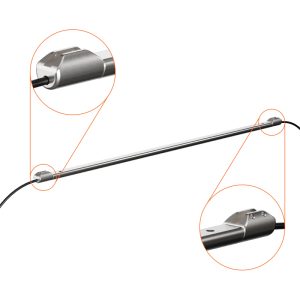
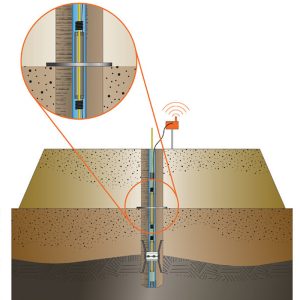
The In-Place Extensometer (IPX) offers automated monitoring of standard magnetic extensometer installations. The system is designed for a simple, adaptable installation with a single cable connection at the top of the borehole. Its large measurement range accommodates large levels of settlement or heave, and ease of adjustment means it can be reconfigured for changed site conditions such as embankment filling or cutting.

NANO TRIAXIAL TILT SENSOR
In stock
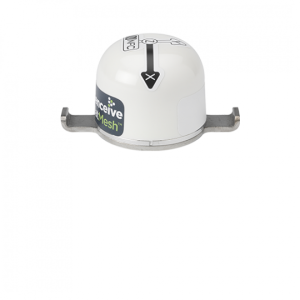
The Nano range uses the same core platform as our other tilt sensors, so it can deliver a similar level of performance and reliability, all in a small and robust enclosure. Nanos have been successfully used in many applications, including:
- Tunnel distortion
- Tunnel heave/settlement
- Embankment slippage (used in conjunction with stake mounts)
- Structural movement
- Rail track heave/settlement
- Rail trackbed cant and twist
IN-PLACE INCLINOMETER (IPI)
In stock
IPI-X IN PLACE INC – EXT
In stock
WATER LEVEL METER
In stock
PENDULUM SYSTEM
In stock
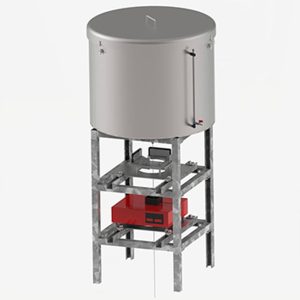
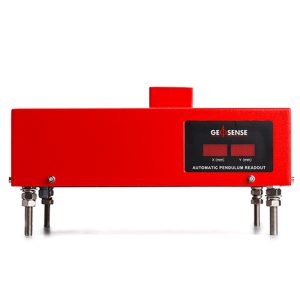
HPS-3500 (Hanging) and IPS-3000 (Inverted) Pendulums are used to measure the tilt or rotation by measuring the relative internal horizontal displacement of points along a true vertical line. Each has a tensioned, stainless steel wire and the effects of the earth gravitational forces to guarantee a perfectly vertical line between a fixed point and a tensioning mechanism. Typical applications include concrete dams, bridges and high rise buildings.
HUMIDITY & CORROSION (CorroDec®2G)
In stock
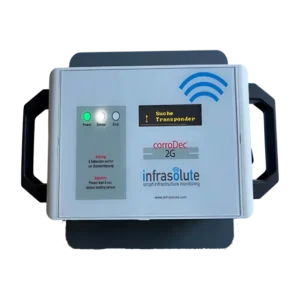
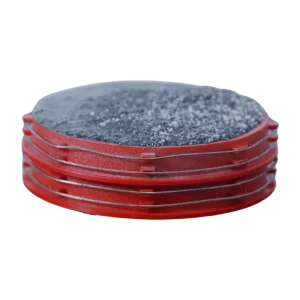
The structural infrastructure must always meet requirements such as performance, stability and durability. These requirements will have a lasting effect on our mobility in the future. The corrosion risk and the corrosion activity of the reinforcing steel largely define these requirements and are determined by various impact and material parameters.
MAGNETIC EXTENSOMETER GXM RANGE
In stock
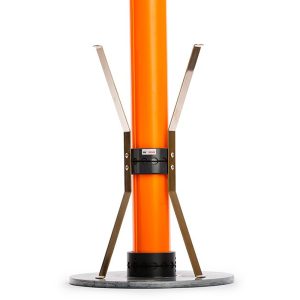
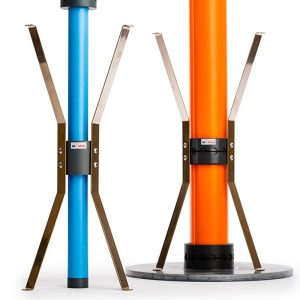
The GEO-XM settlement system is a magnet extensometer system used typically to monitor settlement and heave in foundations, excavations and embankments.
Data received identifies the depth and position where settlement has occurred as well as the total amount of settlement.
It can also be installed behind retaining structures, such as sheet piles and slurry walls, and above underground openings, such as tunnels and shafts.
Reviews
There are no reviews yet.