


VW STRAIN GAUGE SPOT WELD VWS-2020
The VWS-2020 series vibrating wire strain gauges are designed primarily to measure strains on the surface of steel structures but may also be used on other types of material.
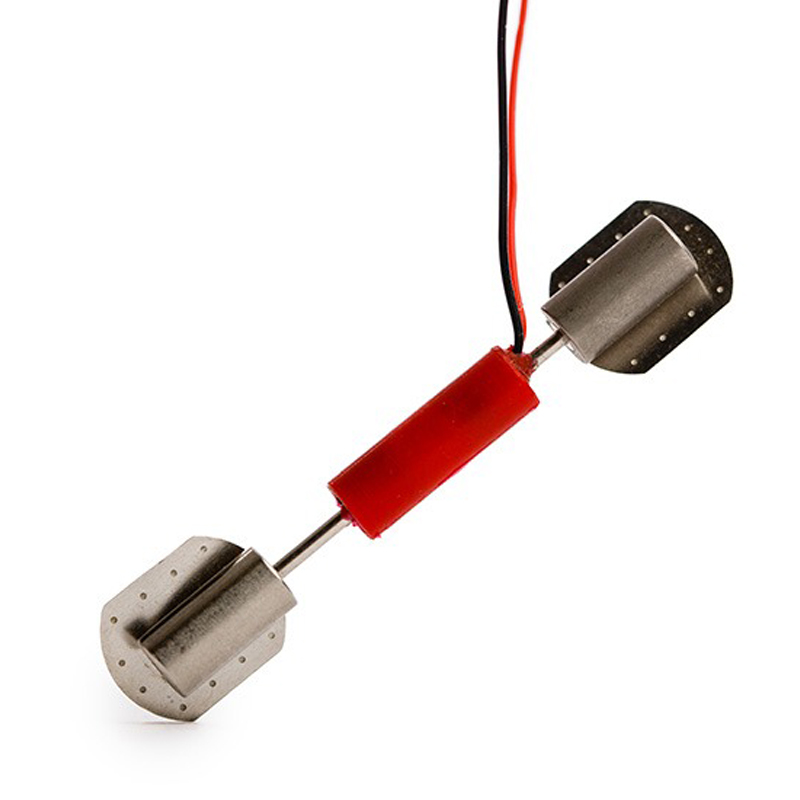
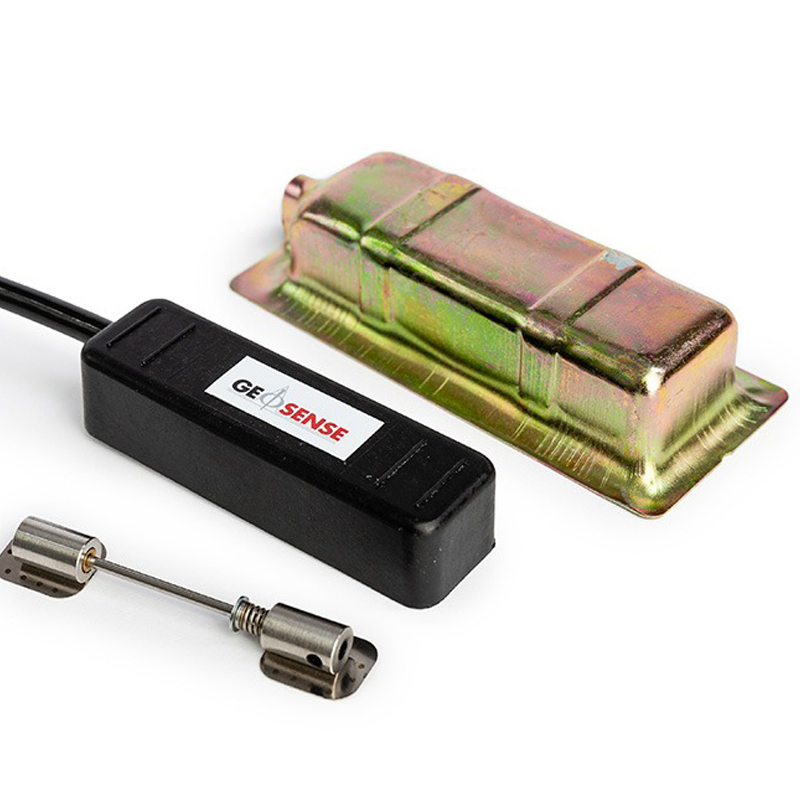
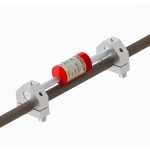
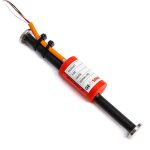
The gauge consists of two end blocks with a tensioned steel wire between them. The end blocks are attached to stainless steel tabs which may be attached to steel structures by spot welding or, using alternative end blocks, bonded or grouted.
Precision tensioning is carried out on site using a special tensioning jig and the gauge can be set for compression, tension or at mid-point.
The strain gauge operates on the principle that a tensioned wire, when plucked, vibrates at its resonant frequency. The square of this frequency is proportional to the strain in the wire.
Around the wire is a magnetic coil which when pulsed by a vibrating wire readout or data logger interface plucks the wire and measures the resultant resonant frequency of vibration.
As the steel or other surface undergoes strain the end blocks will move relative to each other. The tension in the wire between the blocks will change accordingly thus altering the resonant frequency of the wire.
VWS-2020 strain gauges are available in two versions:
- Gauge with integral coil housing
- Gauge only with separate coil housing
| Brands | Geosense |
|---|---|
| Strain Range | 3000 με |
| Resolution | 0.4 με |
| Accuracy | ±0.1% (individual calibration) to ±0.5% (standard batch calibration) FS |
| Non linearity | <0.5% FS |
| Temperature range | -20°C to +80°C |
| Gauge length | 49 mm |
| Overall length | 65 mm |
Related products

VW PIEZOMETER VWP-3000 SERIES
In stock
PRESSURE TRANSDUCER VWT-9000 SERIES
In stock
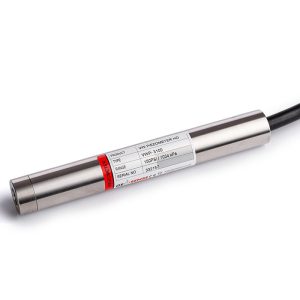
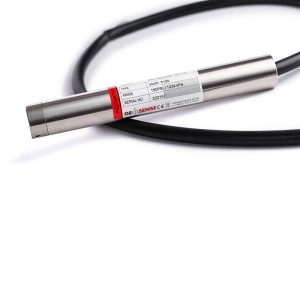
The Geosense® VWT-9000 Series of Pressure Transducers are designed to be connected directly into hydraulic or pneumatic pressure lines by means of a 1/4” BSPF thread. Other thread sizes are available on request.
They are typically used to monitor uplift pressures within dams and to enable manual standpipe piezometers to be upgraded into an automated data acquisition system.
OPTICAL DISPLACEMENT SENSOR NODE
In stock
IN-PLACE TILT METER MEMS
In stock
IN-PLACE INCLINOMETER (IPI)
In stock
TILT BEAM MEMS
In stock
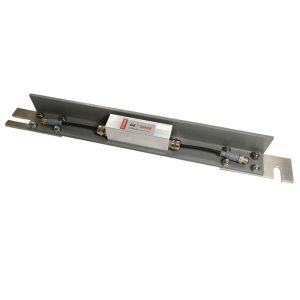
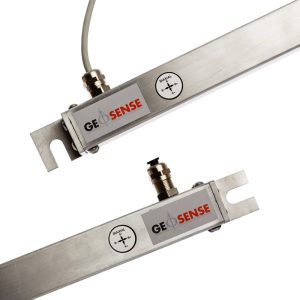
MEMS Tilt Beams are designed for attachment to structures, on either a vertical or horizontal surface, for the measurement of tilt or differential settlement.
They consist of a highly accurate MEMS sensor housed in a fully sealed enclosure which is mounted on a lightweight rigid GRP beam. This can be mounted onto the structure using special anchors. The GRP beam has a very low coefficient of thermal expansion meaning that thermal affects are minimised.
WATER LEVEL METER
In stock
PENDULUM SYSTEM
In stock
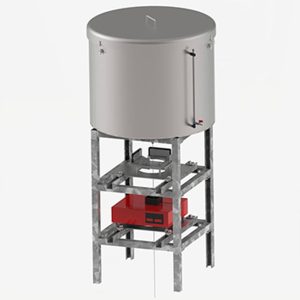
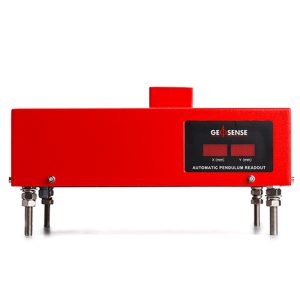
HPS-3500 (Hanging) and IPS-3000 (Inverted) Pendulums are used to measure the tilt or rotation by measuring the relative internal horizontal displacement of points along a true vertical line. Each has a tensioned, stainless steel wire and the effects of the earth gravitational forces to guarantee a perfectly vertical line between a fixed point and a tensioning mechanism. Typical applications include concrete dams, bridges and high rise buildings.
Reviews
There are no reviews yet.