

TDR PORTABLE READOUT
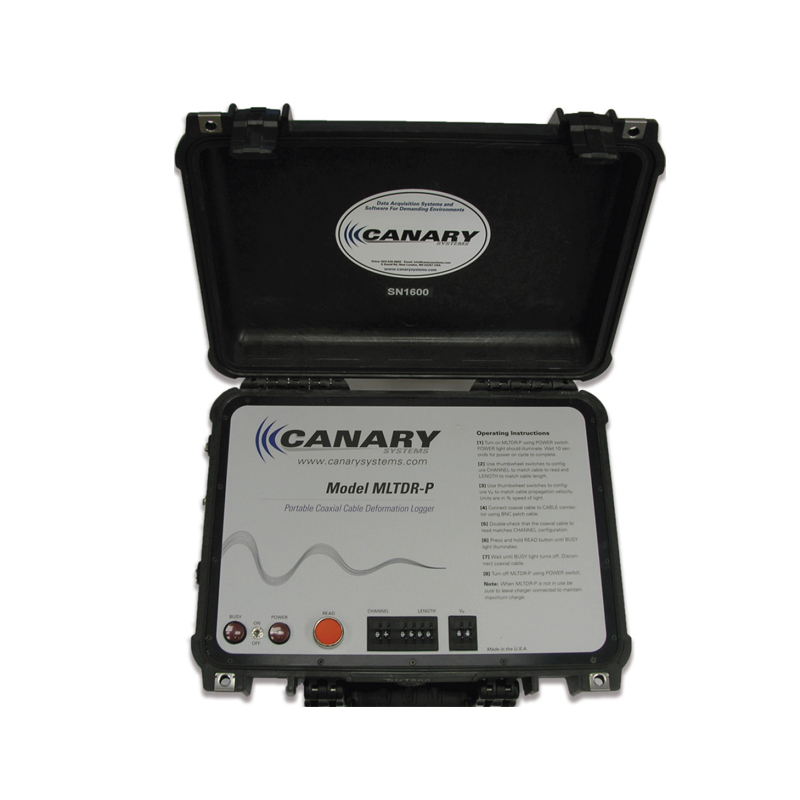
Lightweight, Portable and Powerful
The MLTDR-P is field-configurable for Cable Channel, Cable Length and Cable Velocity (Vp).
A 12AHr lead-acid battery provides power, recharging is accomplished via the power port on the side of the reader and a supplied charging cable. Communications are provided via RS232 interface through the supplied cable. There is an optional Bluetooth interface available, on request.
Time Domain Reflectrometry (TDR) is increasingly being used in geotechnical applications for deformation monitoring in soils and concrete. It provides accurate location information for faults and can provide indication of the static or dynamic nature of the faults. It is typically used to monitor slope movement of embankments including highway cuts, rail beds, bridge abutments and open pit mines.
TDR technology was originally developed by the telecommunications industry as a method for detecting faults, or breaks, in cables. The principle is similar to radar, where a signal is broadcast and distant objects cause a portion of the signal to be reflected back towards the generator. By measuring the time between transmission and reception, and knowing the speed at which the signal is traveling, accurate determinations of the distance can be calculated.
In TDR applications the signal is an electrical pulse broadcast down a coaxial cable, and changes in the impedance of the cable, either inductive or capacitive, cause reflections to be returned to the signal generator. The resultant reflections are measured and presented as a function of time, the time is translated to distance based on the known propagation velocity of the cable being utilized. In geotechnical applications the coaxial cable typically takes the form of a rugged coaxial cable with a diameter of 12mm (0.5”). The cable is usually grouted into a borehole drilled into the embankment to be monitored. Any movement of the embankment will crimp the cable, and the reflections indicate approximate magnitude of the crimp and the location. The resolution is related to the number of samples of data being collected for the waveform.
Data returned by the electronics is referred to as a reflection coefficient, or percentage of reflection, and is in a range of 1 (open circuit) to -1 (short circuit). A value of zero indicates no reflection. Typically, with very long cables there is some absorption of the signal down the length of the cable which shows as an increasing reflection coefficient. Deformations or abnormalities in long cable lengths will still result in an increase or decrease in the reflection coefficient at those locations. A sample data output is provided below.
All distances are “apparent”, not absolute. A key configuration parameter of the monitoring system is the velocity of propagation (Vp), this is the percentage of the speed of light that the electrical signal travels down the cable. Vp typically ranges between 0.65 and 0.90 but these are approximate values supplied by the manufacturer. In-situ modification of the cables, using a few crimps applied to the cable at measured distances during installation, can be useful to help establish more accurate distance measurements. Contact Canary Systems® for more information on this technique.
| Brands | Canary Systems |
|---|---|
| Datalogger | CR6 |
| Universal Channels | 12 |
| Input Voltage Range | +/-5V |
| Digital Ports | 16 |
| Communications | Ethernet, USB, CS I/O, RS-232, CPI, RS-485, SDI-12 |
Related products
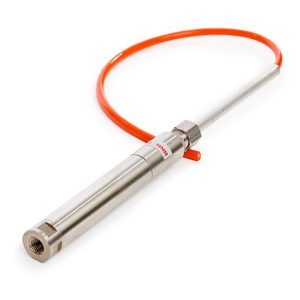
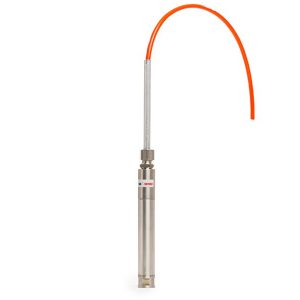
VWPHT-3600 SERIES
In stock
The VWPHT-3600 series High Temperature Piezometers are suitable for the extreme environments of temperature and pressure found within applications such as geothermal heat and enhanced oil recovery systems including steam assisted gravity drainage (SAGD) and cyclic steam stimulation (CSS). They are capable of monitoring high temperatures up to 250°C and pressures up to 34.5 MPa.
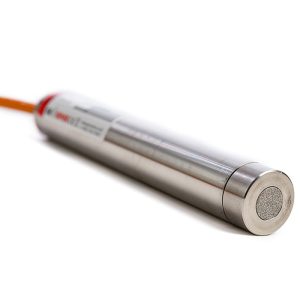
STRAIN GAUGE PIEZOMETER SGP-3400 SERIES
In stock
The SGP-3400 Series of strain gauge piezometers are designed for monitoring soil pore pressure or changes in water level and are also suitable for dynamic monitoring such as pumping tests.
They are accurate, highly-reliable and suitable for use in the harsh environments often found within civil engineering including water wells, boreholes, dams, reservoirs, rivers, tanks or any other body of water.
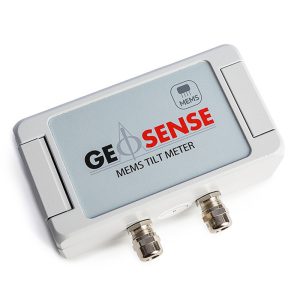
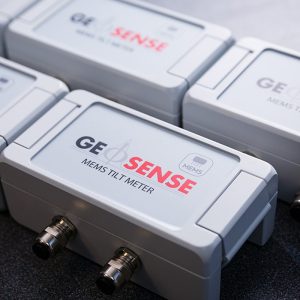
IN-PLACE TILT METER MEMS
In stock
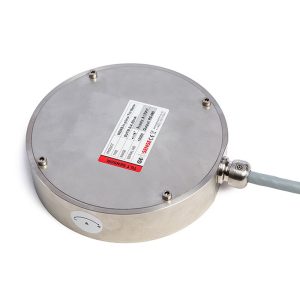
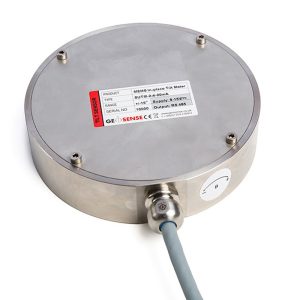
SUBMERSIBLE TILT METER
In stock
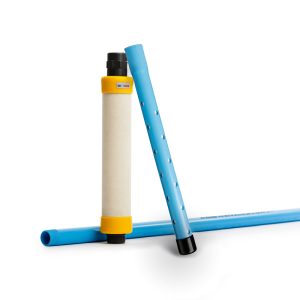
STANDPIPE PIEZOMETER
In stock
TILT BEAM MEMS
In stock
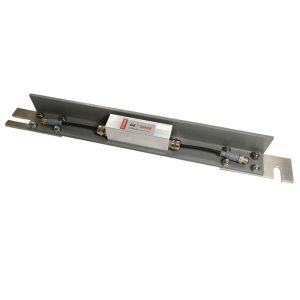
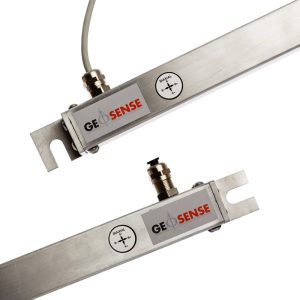
MEMS Tilt Beams are designed for attachment to structures, on either a vertical or horizontal surface, for the measurement of tilt or differential settlement.
They consist of a highly accurate MEMS sensor housed in a fully sealed enclosure which is mounted on a lightweight rigid GRP beam. This can be mounted onto the structure using special anchors. The GRP beam has a very low coefficient of thermal expansion meaning that thermal affects are minimised.
WATER LEVEL METER
In stock
PENDULUM SYSTEM
In stock
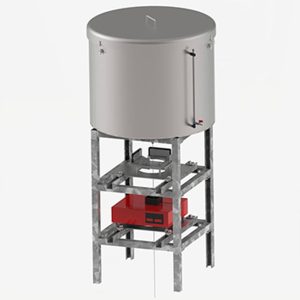
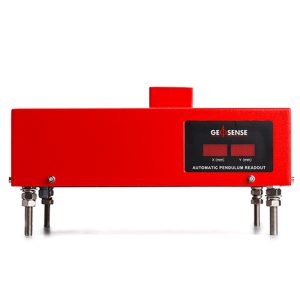
HPS-3500 (Hanging) and IPS-3000 (Inverted) Pendulums are used to measure the tilt or rotation by measuring the relative internal horizontal displacement of points along a true vertical line. Each has a tensioned, stainless steel wire and the effects of the earth gravitational forces to guarantee a perfectly vertical line between a fixed point and a tensioning mechanism. Typical applications include concrete dams, bridges and high rise buildings.
Reviews
There are no reviews yet.