


![u[sonic]WS7 Weather sensor](https://terrasense.ae/wp-content/uploads/2023/11/usonicWS7-150x150.png)

VW LIQUID SETTLEMENT SYSTEM
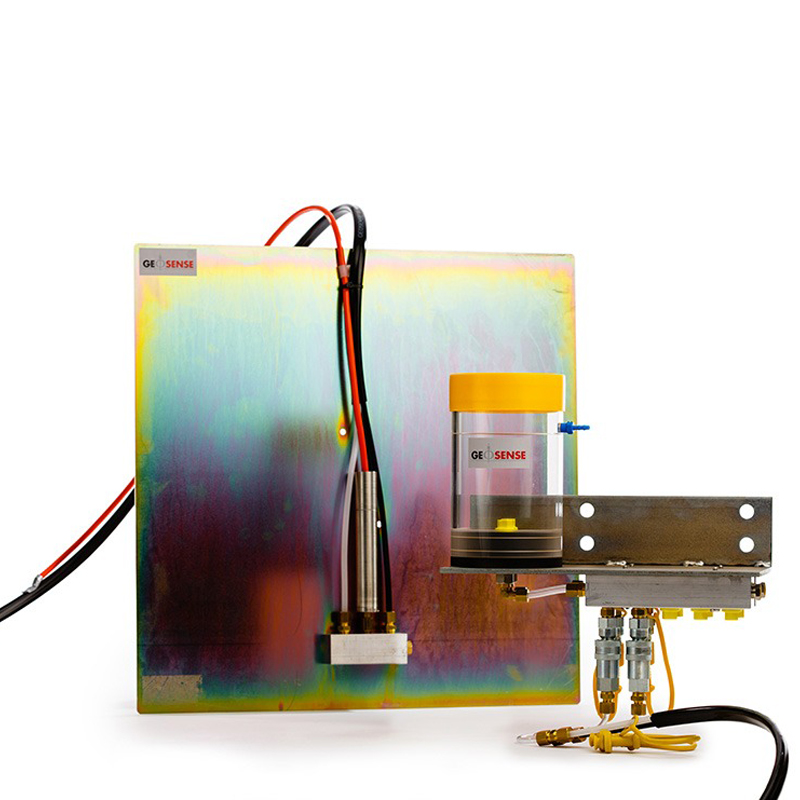
The VWLSS-200 Vibrating Wire Liquid Settlement System is used to monitor settlement or heave in soils and other structures such as embankments, earth and rockfill dams.
The main components are a reservoir (single or multiple), liquid-filled tubing and a vibrating wire pressure transducer cell mounted on a plate or, for borehole application, attached to an anchor.
The vibrating wire sensor is attached to a settlement plate at the point of estimated settlement. The sensor is connected via two liquid-filled tubes which are connected to a reservoir located on stable ground.
As the transducer settles with the surrounding ground the height of the column is increased and the corresponding higher pressure is measured by the transducer.
Settlements are calculated by converting the pressure to millimetres of liquid head.
| Brands | Geosense |
|---|---|
| Standard Range | 7, 17m |
| Sensor accuracy | 0.1% FS |
| System accuracy | Site dependent |
| Resolution | 0.025% FS |
| Temperature range | -20°C to +80°C |
Related products
IPX IN-PLACE EXTENSOMETER
In stock
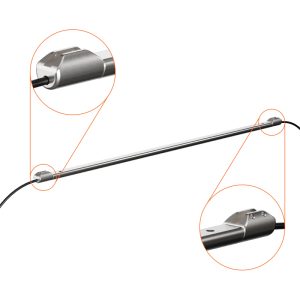
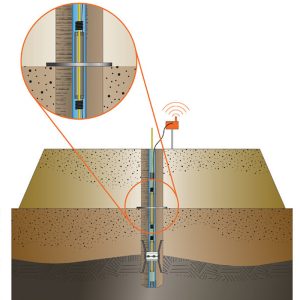
The In-Place Extensometer (IPX) offers automated monitoring of standard magnetic extensometer installations. The system is designed for a simple, adaptable installation with a single cable connection at the top of the borehole. Its large measurement range accommodates large levels of settlement or heave, and ease of adjustment means it can be reconfigured for changed site conditions such as embankment filling or cutting.
VWPHT-3600 SERIES
In stock
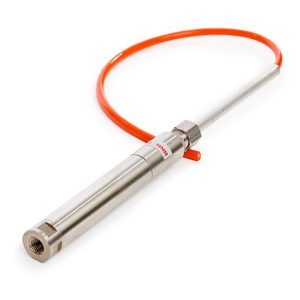
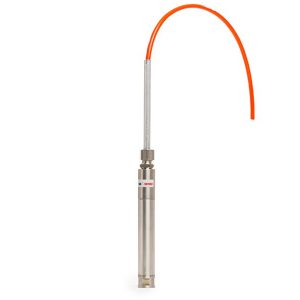
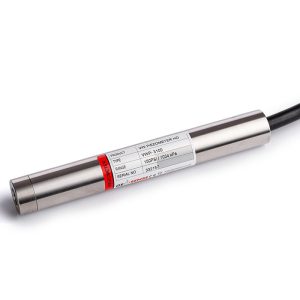
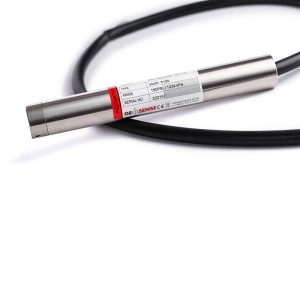
The VWPHT-3600 series High Temperature Piezometers are suitable for the extreme environments of temperature and pressure found within applications such as geothermal heat and enhanced oil recovery systems including steam assisted gravity drainage (SAGD) and cyclic steam stimulation (CSS). They are capable of monitoring high temperatures up to 250°C and pressures up to 34.5 MPa.
PRESSURE TRANSDUCER VWT-9000 SERIES
In stock
The Geosense® VWT-9000 Series of Pressure Transducers are designed to be connected directly into hydraulic or pneumatic pressure lines by means of a 1/4” BSPF thread. Other thread sizes are available on request.
They are typically used to monitor uplift pressures within dams and to enable manual standpipe piezometers to be upgraded into an automated data acquisition system.
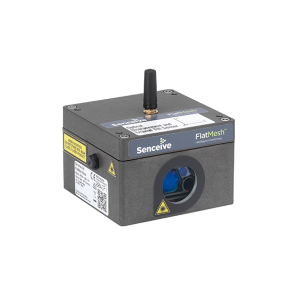
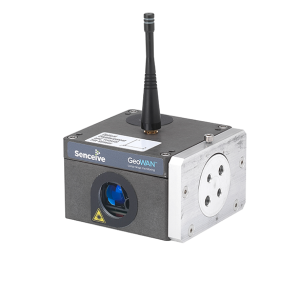
OPTICAL DISPLACEMENT SENSOR NODE
In stock
TRIAXIAL TILT SENSOR NODE
In stock
IN-PLACE TILT METER MEMS
In stock
SUBMERSIBLE TILT METER
In stock
DIGITAL PIEZOMETER – dPiezo
In stock
Reviews
There are no reviews yet.